
Plant Disease
The issue: what’s at stake?
Food security is increasingly under threat from plant pathogens that can spread rapidly through the air. Many fungal, bacterial, and viral plant diseases are dispersed as bioaerosols, traveling across fields and even continents, impacting crop yields and food production. Climate change is exacerbating the problem by altering the conditions that influence pathogen survival, dispersal, and infection rates.
Unchecked plant diseases cause significant economic losses – estimated at $220 billion globally each year – and threaten food supply chains. In response, farmers often rely on preventative pesticide applications, increasing production costs and environmental damage. However, without real-time data on the presence and movement of airborne pathogens, treatments are often applied inefficiently, accelerating fungicide resistance and leading to unnecessary chemical use.
The need for technological breakthroughs
Early warning systems that can predict disease outbreaks are essential for precision agriculture, enabling targeted interventions that reduce losses, improve sustainability, and strengthen food security. However, traditional monitoring techniques have relied on manual spore trapping and microscopic analysis, which is slow and expensive.
Emerging autonomous spore-trapping systems and biosensors promise to transform crop disease monitoring, enabling faster decision making and smarter disease management strategies. Key challenges lie in deploying them at landscape scale and using AI-driven analytics to link pathogen detection with weather data and disease models to provide actionable insights.
Why the Biodetection Technologies Hub?
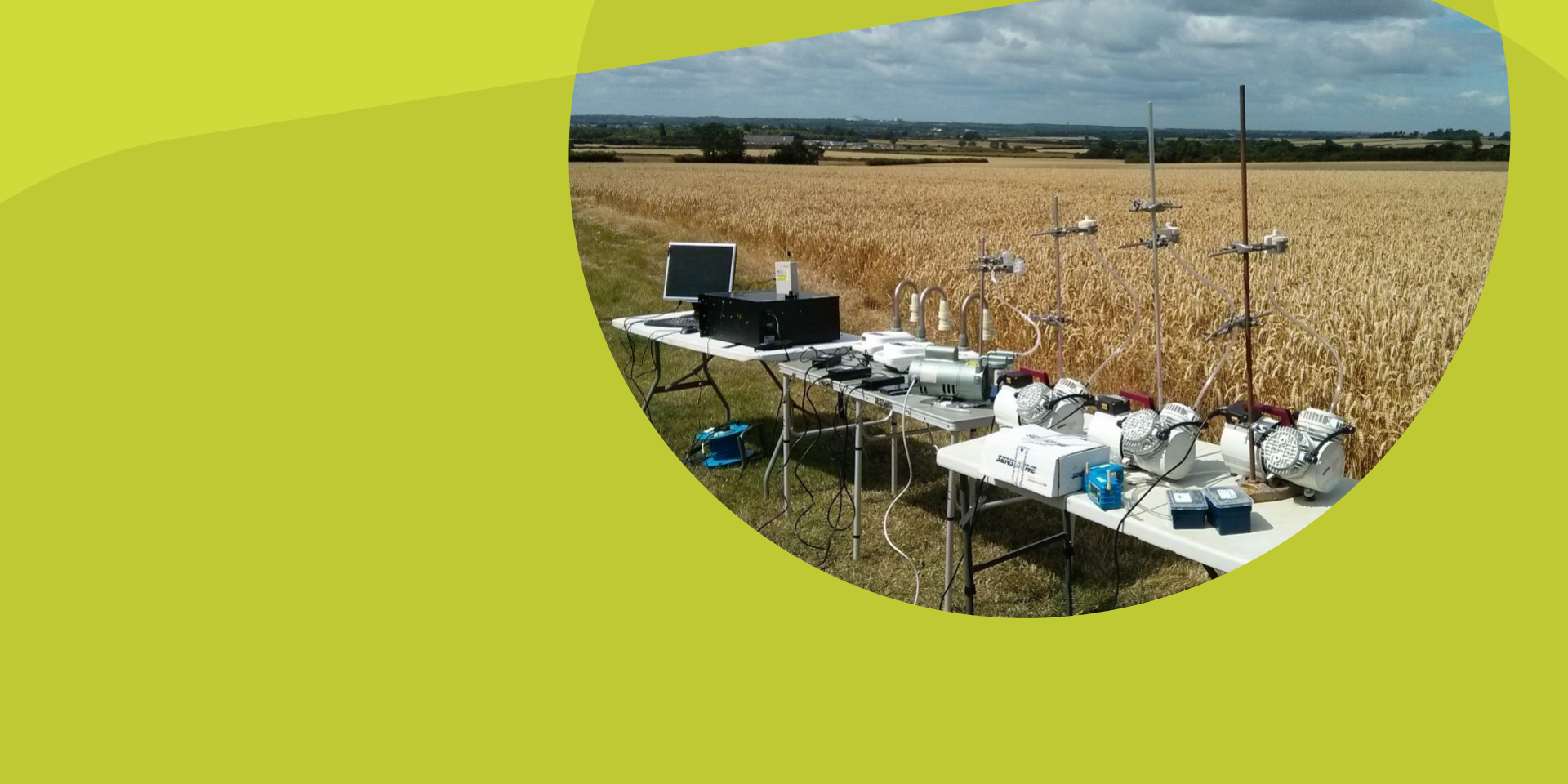
University of Hertfordshire researchers have explored the translation of the principles underlying the capture and analysis of biowarfare agents to the development of disease risk prediction systems for agriculture. Funded by Innovate UK, they worked with Fera Science, Bayer Crop Science and Optisense to design and develop SporeSentry, a prototype autonomous spore-sampling system that can detect airborne fungal pathogens in cereal crops, which cost the UK £120m annually. It was found to predict crop infection up to three weeks before farmers could see signs of disease.
This is one of the technologies the Hub will look to further develop and optimise. Central to this programme of work will be a partnership with Hertfordshire-based Rothamsted Research. Rothamsted has a number of existing collaborations with Hub partners. They are collaborating with the Universities of Hertfordshire, Leeds and Manchester to support PhD projects within the EPSRC Centre for Doctoral Training in Aerosol Science. And the SHAKE project, led by Rothamsted, is bringing together Hertfordshire and Cranfield to help start-ups who are combating climate change with science or tech-based ideas in agriculture and food production.
How do we get there?
The Hub aims to explore the miniaturisation and optimisation of near-real-time spore-trapping technologies for field deployment, integrating machine learning and molecular diagnostics for on-the-spot pathogen identification. Ultimately, the aim is to provide farmers and agronomists with highly precise disease alerts by integrating data from biodetection systems with existing digital agronomy platforms.
The Hub will extend ongoing collaborations with Rothamsted. These include projects to explore ice nucleation as an early warning for crop diseases and to use AI-driven analytics to characterise fungal spores more effectively.